Mattress education
How to Evaluate an Obasan Organic Mattress for Your Sleep Needs
A mattress can be made with carefully chosen materials and still not feel right for you. The more useful question is how its construction, firmness options, and care requirements match your body, sleep habits, and bedroom setup. Here’s a practical way to assess an Obasan organic mattress without letting labels make the decision for you.
Shopping for an organic mattress can feel like sorting through a reassuring vocabulary: natural latex, organic wool, cotton, certifications, and promises of breathability. Those details can matter, especially if material sourcing or certain components are priorities. But they don’t tell you everything about what it will feel like to lie down at the end of a long day.
To evaluate an Obasan mattress, start with the experience you want from a bed. Think about where you feel pressure, whether you sleep on your side, back, or stomach, how much cushioning feels comfortable, and whether you share the bed. Then look at how the mattress is built and what choices are available. In the case of the Obasan Grand Dunlop Latex Mattress, a layered, customizable design gives shoppers several details worth understanding before they decide.
The goal isn’t to find a universally perfect mattress. It’s to make a considered match between a mattress’s features and your own needs—and to confirm the practical details, from the foundation to the return policy, before committing.
Start with your sleep experience, not the organic label
“Organic” describes material standards and sourcing; it does not mean a mattress will automatically be comfortable for every sleeper. Two mattresses with organic components can feel very different depending on their layer arrangement, firmness, thickness, and the way they respond to pressure.
Before comparing specifications, take a few nights to notice what you want to change about your current bed. Do your shoulders or hips feel compressed? Does your lower back feel unsupported? Do you wake because you feel too warm, or because the surface feels too firm? These observations don’t diagnose a health issue, but they can help you describe the comfort you’re looking for.
It’s also useful to separate material preference from performance preference. You might want to avoid certain synthetic materials and appreciate natural fibers, while still needing a particular firmness or a different pillow. A material checklist is a starting point—not a substitute for testing how the whole mattress feels.
Understand what the Obasan Grand is made to do
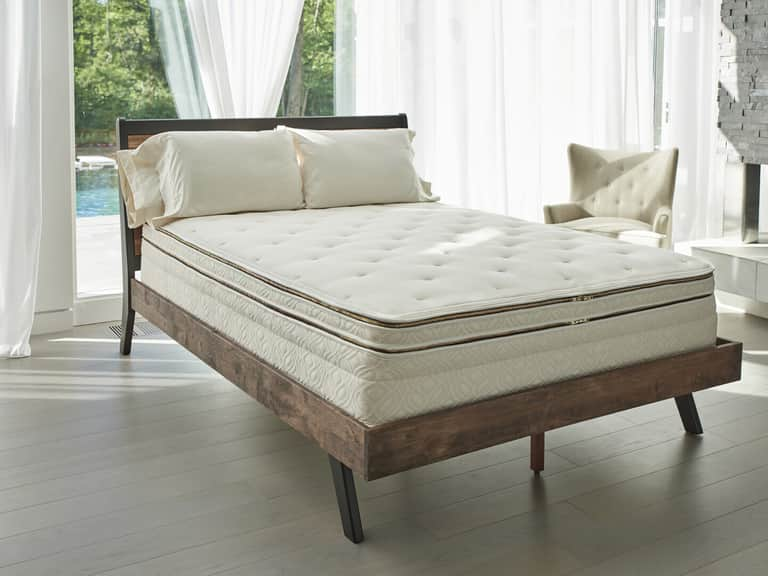
The Obasan Grand has a multi-layer Dunlop latex construction, with a soft top layer intended to reduce surface pressure, a zoned center section, and a choice of medium or firm lower support. It also includes a wool-and-latex topper. The product information describes the mattress as customizable, with options that can vary by side for Queen and King sizes.
That layered approach may appeal to people who want more than a single, uniform comfort setting. The central sections are arranged from head to toe in zones for the shoulders, hips, and feet. Zoning is a design feature, not a guarantee that every body will experience improved alignment. Your height, weight distribution, sleep position, and preferred feel all affect how a zoned mattress works for you.
According to the product details, the Grand includes GOLS-certified organic Dunlop latex, a GOTS-certified organic cotton cover, and organic wool. Latex is generally resilient, meaning it tends to push back rather than slowly sink in the way some foams do. Wool and cotton contribute different surface qualities, while the wool layer is described as helping regulate temperature. How warm or cool you feel will still depend on your room, bedding, sleepwear, and personal preferences.
For readers comparing options, the listed construction and certifications provide useful points to verify. Ask for current documentation if a particular certification, component, or sourcing detail is essential to your choice. Certification names have specific scopes, so check what each one covers rather than assuming one label answers every materials question.
Match firmness to the way you sleep
Firmness is a personal impression, not a universal measurement. A mattress that feels supportive to one person may feel stiff to another, and the same sleeper may respond differently when changing positions. The best approach is to consider both your usual sleep position and how the mattress distributes your weight.
If you mostly sleep on your side
Side sleepers often pay close attention to pressure around the shoulder and hip. A surface that feels too hard may create uncomfortable pressure; one that feels too yielding may not provide the sense of support they prefer. The Grand’s softer top layer and zoned construction are relevant features to investigate, but they don’t guarantee a particular result. If you can test the mattress, lie on your side for several minutes and notice whether you can settle without feeling pushed up or overly compressed.
If you mostly sleep on your back
Back sleepers may want the mattress to feel balanced: cushioned enough to be comfortable, yet supportive through the torso and hips. Consider whether the surface feels even and whether you can relax without a pronounced dip. If you share a bed, each person should test their own side where the configuration allows, rather than assuming one firmness choice suits both.
If you mostly sleep on your stomach
Stomach sleepers commonly prefer a surface that does not feel excessively soft beneath the middle of the body. If that describes you, pay particular attention to the support option and the way the mattress feels around your hips. A firmness label alone cannot tell you whether the mattress will feel right; an in-person trial or a well-defined home trial is especially helpful.
Many people change positions during the night. If you do, test the mattress in each position you use regularly. The question is not whether it feels ideal for a single moment, but whether you can move and settle comfortably over time.
Consider pressure relief without mistaking softness for support
Comfort and support are related, but they are not interchangeable. A plush surface can feel inviting at first, while still failing to provide the feel you want once you’ve been lying down for a while. Conversely, a firm surface may feel stable but too unyielding at pressure-sensitive areas.
The Grand’s soft top and included topper are intended to create a more cushioned surface over its support layers. When evaluating that design, notice whether the cushioning feels pleasantly gentle or whether it makes you feel as though you are sinking farther than you’d like. Pay attention to pressure around your shoulders, hips, and other areas that tend to feel sensitive.
There’s no need to force a mattress into the right role with accessories before you know how its basic configuration feels. A topper can change the surface sensation, but it may not correct a deeper mismatch in support. If the mattress is adjustable by side in your chosen size, ask exactly which components can be changed and what that means for future adjustments.
Think about temperature and the whole sleep setup
People who sleep warm often look for breathable construction, but no material can guarantee a cool night in every bedroom. The Obasan Grand’s description highlights wool and cotton alongside latex, and identifies temperature regulation as a design consideration. That may be worth exploring if you tend to overheat, while remembering that sheets, blankets, room temperature, and individual physiology also play a role.
Ask how the cover and included topper are constructed, whether any components can be removed, and how they should be maintained. The product guidance says the mattress cover is not machine washable and recommends spot cleaning with a small amount of water and mild soap. For some households, that care requirement is a small consideration; for others, it may be important to plan around.
A mattress protector can help guard against everyday spills and wear, but check that it fits the mattress depth and doesn’t noticeably change the surface feel. The manufacturer’s care instructions recommend using a protector and keeping the mattress dry. A breathable protector that fits securely may be a practical part of evaluating the full bed, not an afterthought.
Make sure your foundation is compatible
A mattress is only one part of the sleep system. The surface beneath it can affect stability, ventilation, and whether the setup follows the manufacturer’s recommendations. The Obasan Grand care guidance calls for an Obasan foundation or an equivalent solid wood slat base. It specifies slats between one and four inches wide, no more than three inches apart, and center support for larger sizes.
Before ordering, measure your existing frame and confirm that it meets the current requirements. Don’t assume every platform, adjustable base, or closely spaced slat system is appropriate simply because it fits the mattress dimensions. The product information lists the mattress as compatible with an adjustable base, but it’s sensible to confirm that your specific base and configuration are approved.
Also account for the Grand’s height. Its listed mattress profile is 12 inches, with an additional 3.5-inch topper included. That can change the overall bed height, fitted-sheet requirements, and the way the mattress sits beneath a headboard. Confirm the total assembled height and the depth of your sheets before finalizing the setup.
If you share the bed, evaluate both sides
A shared mattress can involve two different comfort preferences, two sleep schedules, or different sensitivities to movement. With a dual-sided configuration available in certain sizes, the Obasan Grand may offer a way to select firmness by side. Verify which sizes qualify and how the sides are configured before treating this as a solution for every couple.
Both sleepers should try the mattress, ideally at the same time. Lie down in your regular positions, change positions as you normally would, and notice whether movement on one side is distracting on the other. The product information describes low motion transfer, but individual impressions vary, and a brief trial may not capture how the bed feels through a full night.
Discuss practical details together, too: who will handle rotating or flipping layers, what kind of protector you’ll use, and whether the mattress is easy to access in your room. A good choice should work for the household, not just for the person who researched the most specifications.
Read the policies as carefully as the materials list
Natural materials and thoughtful construction are only part of a major mattress decision. Before purchasing, read the trial, return, exchange, delivery, and warranty terms from the seller in full. The product information lists a 20-year limited warranty, but a warranty is not the same as a comfort trial, and coverage can depend on specific terms and conditions.
Ask what counts as a covered defect, whether there are fees for pickup or return, and what happens if you need to change a firmness configuration. Confirm whether delivery, setup, old-mattress removal, or service calls carry additional costs. These details can be less exciting than talking about latex and wool, but they matter when a mattress arrives at your door.
A suitable in-person test is useful when available. If you’re buying remotely, look for a clearly explained home trial and return policy, and keep the paperwork. Give yourself enough time to assess comfort rather than making a decision based only on a few minutes in a showroom. At the same time, follow the seller’s trial requirements so you don’t accidentally affect your options.
A simple checklist before you decide
Use this checklist to bring the decision back to your own priorities:
- What position do you sleep in most often, and which positions do you move into during the night?
- Where do you notice pressure or discomfort on your current mattress?
- Do you prefer a buoyant, responsive feel, or a more deeply conforming surface?
- Would the Grand’s soft top and wool-and-latex topper suit the amount of cushioning you want?
- Does a medium or firm support option sound closer to your preference, and can you test it?
- If you share the bed, are separate firmness choices available in your size?
- Do the listed materials and certifications meet your particular priorities?
- Does your foundation meet the requirements for slat width, spacing, and center support?
- Are the assembled height, mattress weight, sheet fit, and room access manageable?
- Have you read the current trial, return, delivery, care, and warranty policies?
There is no score that can turn these answers into a guaranteed verdict. They are prompts for a better conversation—with the seller, with anyone sharing the bed, and with yourself about what you actually want from a mattress.
The bottom line on evaluating an Obasan mattress
The Obasan Grand stands out for its layered Dunlop latex design, wool-and-cotton materials, zoned construction, and available firmness customization. Those features give shoppers concrete questions to explore. They don’t erase the most important variable: how the mattress feels to the people who will sleep on it.
Approach the decision with two checklists. The first covers your comfort needs—sleep position, pressure points, preferred firmness, temperature, and whether you share the bed. The second covers the practical details—certifications, foundation compatibility, care instructions, sizing, trial terms, and warranty conditions. When both lists make sense, you’ll be in a stronger position to decide whether the mattress fits your life.
That’s the heart of a thoughtful mattress evaluation: not choosing a bed because a label sounds reassuring, but understanding what it is, how it is put together, and whether its particular feel is right for you.