Mattress 101 · Latex bedding
Dunlop Latex: How Density and Resilience Shape Sleep Feel
Dunlop latex is often described as buoyant, supportive, and long-lasting. But the name alone can’t tell you exactly how a mattress or topper will feel. Density, firmness, layer design, and the rest of the construction all play a part—and knowing what those terms mean can make a confusing comparison feel much more manageable.
Published November 3, 2026
What makes Dunlop latex different?
Latex bedding begins with latex foam, a flexible material made by turning liquid latex into a cellular foam. Dunlop is one of the established ways of making it. In a simplified description, latex is whipped into a foam, placed in a mold, and heated until it sets. The resulting material is then washed and dried. The details can vary among manufacturers, but the finished foam is known for a springy, steady response beneath the body.
That response is part of Dunlop’s appeal. Rather than feeling as if you are slowly sinking into a surface, you may notice the mattress push back as you settle in. The sensation is often called buoyant or resilient: the material compresses under pressure and rebounds when that pressure changes. For some sleepers, that makes it easier to shift positions than on a surface that conforms more slowly.
Still, there is no single Dunlop feel. A latex layer can be softer or firmer, thicker or thinner, and used by itself or combined with other materials. A mattress’s cover, quilting, base, and support layers affect what reaches the sleeper, too. “Dunlop latex” identifies a material and process—not a universal comfort setting.
Density and firmness are related, but not interchangeable
Density describes how much material is packed into a given volume. In latex, density can offer useful information about the foam’s composition and weight. It is not, by itself, a reliable promise that a layer will feel firm, soft, supportive, or comfortable to a particular person.
Firmness is a different idea: it describes how much a surface resists compression in use. Density and firmness may be related in a particular product, but one number cannot stand in for the other. Two latex layers with similar density can have different firmness ratings, and two layers with similar firmness can be built differently. Manufacturing formulation, foam structure, layer thickness, and the way the layer is supported can all influence the result.
That distinction matters when product descriptions present a density figure as if it were a comfort rating. Density may help with comparisons when brands use consistent measurements and explain their methods. But there is no universal consumer shorthand that turns a density number into a guaranteed sleep feel across every manufacturer. If a seller provides density without firmness information, ask for clarification rather than assuming the layer will be hard or soft.
It can help to think of density as one piece of a construction profile, not a verdict. A useful specification sheet may identify the latex type, layer thickness, firmness designation, and the position of that layer in the mattress. When those details are missing, the material name alone leaves important questions unanswered.
Resilience: the “push back” feeling
Resilience refers broadly to how a material responds when it is compressed and then released. In everyday terms, it is the spring-back people often notice in latex. A resilient surface can compress under a shoulder or hip and recover as pressure moves, creating a more lively feel than a material that slowly molds around the body.
Resilience is not the same as firmness. A soft latex layer can still rebound quickly, while a firm layer may also have a lively response. Nor does resilience automatically mean better pressure relief. Pressure comfort depends on whether the mattress lets heavier parts of the body settle enough while keeping the body supported in a comfortable position. A springy feel can be pleasant and easy to move on, but it is a matter of preference.
People who change positions often may appreciate a surface that responds promptly when they turn. Others may prefer a slower, more enveloping sensation. Neither preference is a measure of good or bad sleep habits. It is simply one reason that a mattress described as “supportive” can feel inviting to one person and too firm or too active to another.
Resilience also shapes how the surface feels during ordinary movements, such as sitting down, rolling over, or getting out of bed. The overall effect depends on the whole mattress, including its base and any comfort layers. It is worth testing the complete sleep surface when possible rather than judging a material in isolation.
Why layers change the experience
A latex mattress may use one continuous core, several latex layers, or latex paired with other materials. Layering gives manufacturers a way to combine different comfort and support characteristics. A softer upper layer can provide more initial give, while a firmer layer below can limit how far the body settles. The exact outcome depends on the layers’ properties and how they work together.
Thickness matters, too. A thin comfort layer may create a subtle change in surface feel, whereas a thicker layer can make its characteristics more noticeable. A mattress with a firm core and a softer latex layer on top may feel quite different from a mattress made entirely from one firmness of latex—even when both are described as latex beds.
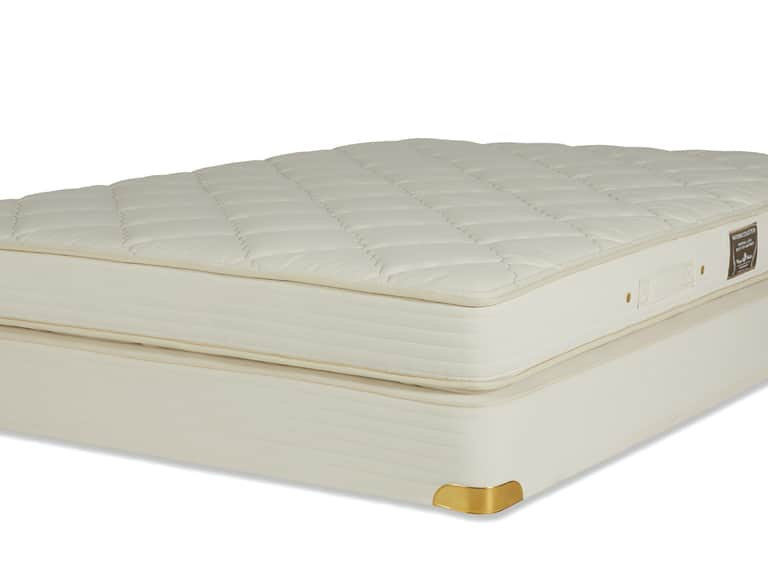
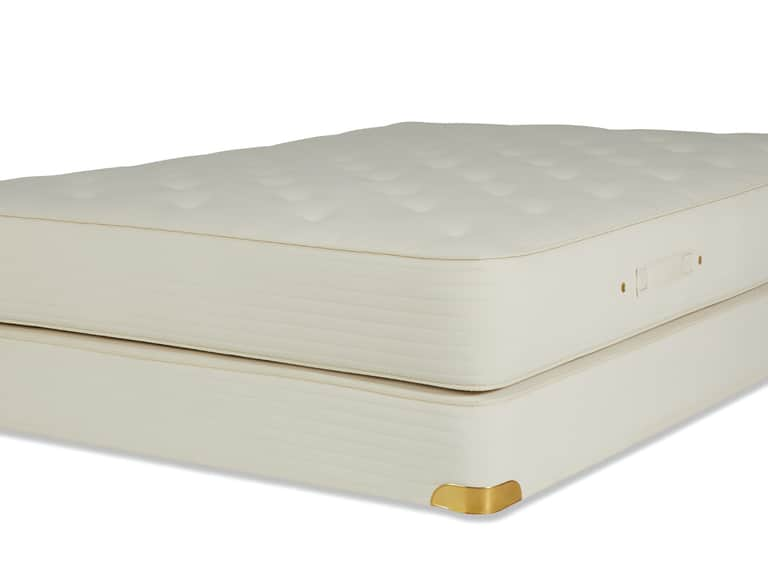
For a concrete example of layered construction, the Royal-Pedic Natural Latex Quilt-Top Mattress is described as having an eight-inch latex core: a six-inch firm core with a two-inch medium latex layer. Its product information also describes a surrounding wool-and-cotton quilted construction. Those details illustrate why asking about a mattress’s layers can be more informative than relying on the word “latex” alone. They do not establish how the mattress will feel to every sleeper, and they should not be treated as a substitute for trying a comparable surface when that option is available.
Layer arrangement also affects how easy it is to interpret a product’s specifications. If a listing simply says “natural latex,” consider asking whether the product uses Dunlop latex, another latex process, or a blend; how many layers it contains; and whether the stated firmness refers to an individual layer or the finished mattress.
Natural latex: read the materials description carefully
“Natural latex” is a familiar phrase in bedding, but it does not answer every materials question. Products can differ in the proportion and source of latex, how the foam is made, and what else is included in the mattress. Some products use natural latex; others may use blends or different latex formulations. The wording on a product page should be specific enough to help you understand what you are considering.
Look for a clear materials breakdown, including the latex type, any layers or blends, and the materials used in the cover and surrounding components. If a certification is mentioned, find out what it covers and whether it applies to the latex itself or to a broader product. A certification can provide useful information within its stated scope, but it does not automatically tell you whether the mattress is comfortable or suitable for your needs.
Material choice can also matter to people with particular sensitivities or preferences. If you have an allergy or a medical concern, consult a qualified health professional and confirm the specific product composition with its manufacturer. Labels such as “natural” or “chemical-free” should not replace careful review of ingredients, construction, and any relevant safety information.
What Dunlop latex may feel like in daily use
Many sleepers describe Dunlop latex as supportive and buoyant, with a more immediate response than the slow contouring associated with some other foams. That description can be a helpful starting point, not a guarantee. Perceived comfort changes with body shape, weight distribution, sleep position, temperature, bedding, and the mattress beneath the latex.
Side sleepers may want to pay close attention to how the shoulder and hip settle, because those areas often meet the mattress with more concentrated pressure. Back sleepers may focus on whether the surface feels comfortably supportive through the torso and hips. Stomach sleepers may prefer to consider whether the sleep surface allows the midsection to sink more than feels comfortable. These are ways to guide a personal trial, not rules that determine which material someone must choose.
Comfort is also personal over time. A surface that feels unfamiliar during a quick showroom test may seem different after a longer rest, while a mattress that feels pleasant at first may not remain comfortable through a full night. If you can test a mattress, spend enough time in your usual sleeping positions to notice pressure, ease of movement, and whether your body feels settled. Check the trial and return terms before buying, because policies vary.
A practical checklist for comparing latex
When two products both claim to use Dunlop latex, compare their construction rather than assuming they will feel alike. These questions can help bring the important differences into focus:
- What exactly is the material? Ask whether the latex is Dunlop, another type, or a blend, and whether the manufacturer provides a detailed materials description.
- What does the firmness rating refer to? Check whether it describes a particular layer or the finished mattress, and ask how the brand defines its scale.
- How thick is each layer? Layer thickness and order affect how the surface and underlying support work together.
- Is density listed with context? A number is most useful when the brand explains its measurement and provides other construction details. Don’t treat density as a direct firmness label.
- What is around the latex? Covers, quilting, wool, cotton, and other components contribute to the finished feel and care requirements.
- What base is recommended? Follow the manufacturer’s guidance for platform beds, slats, box springs, or adjustable bases. Support underneath can influence performance and may affect warranty terms.
- What are the care and trial terms? Review cleaning instructions, warranty coverage, delivery conditions, and the return or exchange policy before making a decision.
If a retailer cannot answer basic construction questions, that uncertainty is worth weighing. Clear descriptions help shoppers compare products more fairly and set realistic expectations. They also make it easier to distinguish genuine material details from broad marketing language.
Durability and care: look beyond a single number
Latex is commonly selected for its resilient feel and reputation for durability, but no material description can predict the life of every mattress. Longevity depends on the quality and construction of the product, how it is supported, how it is used, and how it is cared for. Density may be one element of a technical comparison, but it cannot tell the whole durability story on its own.
Ask what the warranty covers and what it excludes. A warranty is not a promise that a mattress will feel unchanged for a particular number of years; its terms define the situations in which the maker may provide a remedy. Keep the purchase details and care instructions, and use a suitable foundation as specified by the manufacturer.
Latex layers and mattress covers may have different care needs. Some covers are not removable or machine washable, and some components should only be spot cleaned. Avoid applying a cleaning method based on assumptions about the material; follow the manufacturer’s instructions. A properly fitted mattress protector can help limit everyday spills and soil, provided it is compatible with the mattress and does not interfere with its feel or care requirements.
Common assumptions worth revisiting
“Higher density always means firmer.” Not necessarily. Density and firmness are separate specifications, and a density figure needs context before it can help with a comparison.
“All Dunlop latex feels the same.” Formulation, firmness, thickness, layering, and the surrounding mattress materials can all change the experience.
“Resilient means hard.” Resilience describes spring-back, not simply how much pressure it takes to compress a layer. A latex surface can feel soft and responsive, firm and responsive, or somewhere between.
“A product description can tell me exactly how I’ll sleep.” Specifications can explain construction, but personal comfort is best assessed through a trial or a well-defined return policy. No material name can guarantee an individual outcome.
The bottom line
Dunlop latex is a responsive material used in a wide range of bedding, but the process name only begins the conversation. Density can describe how much material is present in a given volume; firmness describes resistance to compression; resilience describes how a material rebounds. Those characteristics are distinct, and all are influenced by the finished product’s layers and construction.
For a thoughtful comparison, look for specific information about latex type, firmness, density, layer thickness, and surrounding materials. Then consider how the complete mattress feels in the positions you actually sleep in. The best choice is not the one with the most impressive-sounding number. It is the one whose construction is clear and whose feel suits your own comfort preferences.
Frequently asked questions
Is Dunlop latex always firm?
No. Dunlop latex can be produced in different firmness levels and used in different thicknesses and layer combinations. The feel of the finished mattress depends on the complete construction.
Does latex density tell me how comfortable a mattress will be?
No single density figure can predict personal comfort. It may be useful as part of a detailed specification, but firmness, layer design, body shape, sleeping position, and individual preference matter as well.
What is the main feel associated with latex resilience?
Resilience is often noticed as a springy or buoyant response: the foam compresses under pressure and rebounds when pressure shifts. The exact sensation varies by formulation and mattress construction.